You built a website. You wrote content. You waited.And still — your website is buried on page 4 of Google, where no one ever looks. Sound familiar?
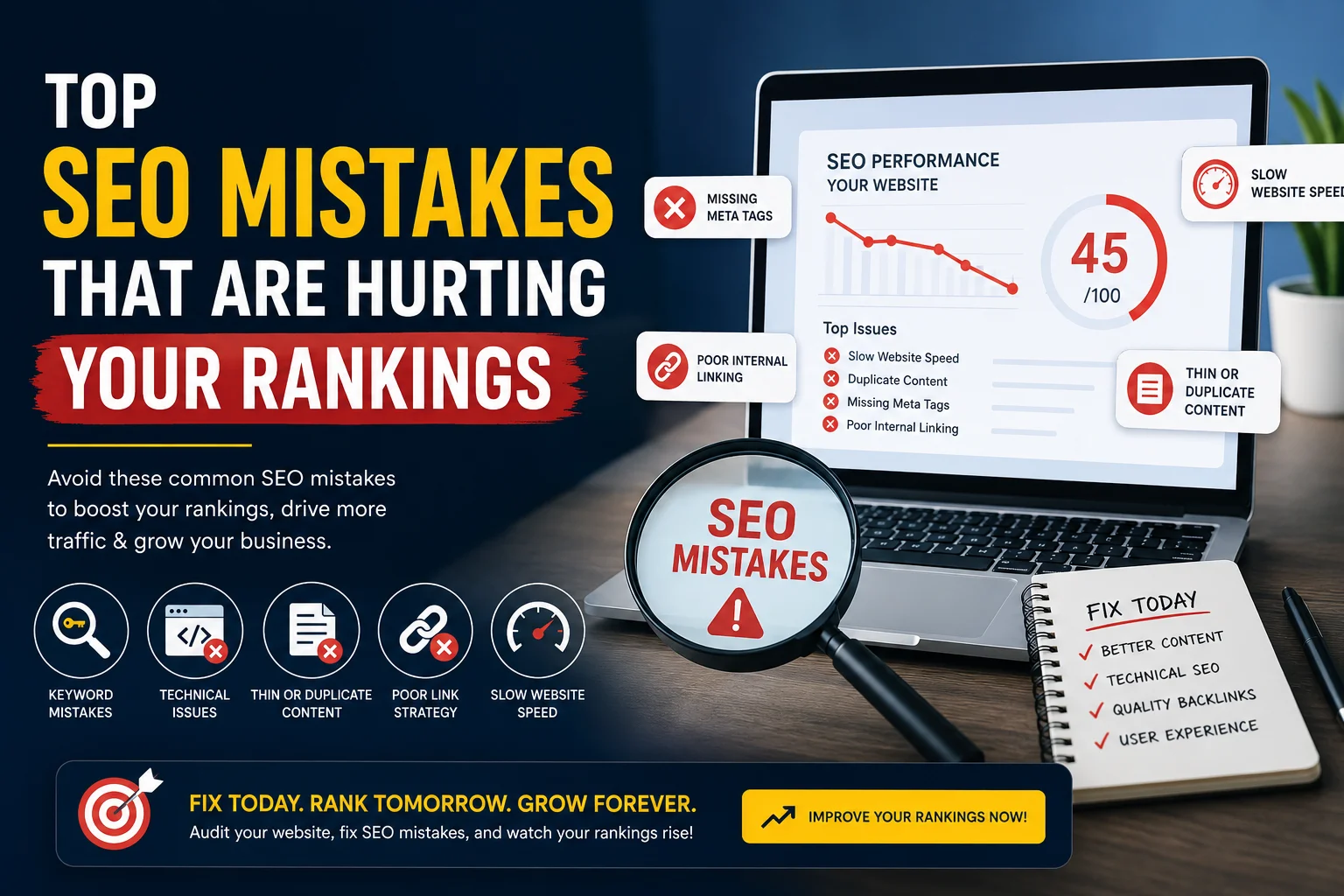
The problem usually isn’t your business or your service. It’s SEO mistakes that are quietly sabotaging your rankings without you even realizing it. The good news? Every one of these mistakes is fixable. Here are the 7 most common SEO mistakes businesses make — and exactly how to fix them.
Mistake #1: Ignoring Keyword Research
Many businesses write content about what they want to say, instead of what their customers are actually searching for.
If your target audience searches “affordable web design company in Pakistan” but your website only mentions “digital solutions provider,” Google won’t connect the two.
The Fix: Use tools like Google Keyword Planner, Ubersuggest, or Ahrefs to find keywords your audience is actually using. Then naturally incorporate those keywords into your page titles, headings, and content.
Mistake #2: Slow Page Speed
Google has confirmed that page speed is a ranking factor. If your website takes more than 3 seconds to load, you’re losing both visitors and rankings.
Slow websites are especially damaging on mobile, where most users are browsing on slower connections.
The Fix:
- Compress and optimize images (use WebP format)
- Use a fast, reliable hosting provider
- Enable caching
- Minimize unnecessary plugins and scripts
- Check your speed at PageSpeed Insights
Mistake #3: Not Optimizing for Mobile
Over 60% of all web searches happen on mobile devices. If your website isn’t fully mobile-responsive, Google’s mobile-first indexing will rank you lower — and users will leave in seconds.
The Fix: Ensure your website is built with a responsive design that automatically adjusts for all screen sizes. Test it using Google’s Mobile-Friendly Test tool.
Mistake #4: Missing or Weak Meta Titles and Descriptions
Your meta title and meta description are what users see on Google before they click. If they’re missing, duplicated, or poorly written, you’re missing clicks — even when you do rank.
The Fix: Write a unique, keyword-rich meta title (under 60 characters) and meta description (under 160 characters) for every page and blog post. Make them compelling enough that users want to click.
Mistake #5: Publishing Thin or Low-Quality Content
Google’s algorithm is smart enough to know the difference between content that genuinely helps users and content that’s just filler. Short, low-effort blog posts with no real value will not rank — and can actually hurt your site.
The Fix: Focus on quality over quantity. Write in-depth, well-researched articles that answer your audience’s real questions. Aim for at least 800–1,500 words for most blog posts, and make sure every piece of content is genuinely useful.
Mistake #6: No Internal Linking Strategy
Many websites are a collection of isolated pages that don’t link to each other. This is a missed SEO opportunity.
Internal links help Google understand the structure of your website, discover new pages, and determine which pages are most important. They also keep visitors on your site longer.
The Fix: When writing a new blog post or page, link to 2–3 other relevant pages or posts on your website. For example, a blog about SEO tips should link to your SEO services page.
Mistake #7: Skipping Google Search Console
If you’re not using Google Search Console, you’re flying blind. This free tool shows you exactly how Google sees your website — which pages are indexed, which keywords you’re ranking for, and any crawl errors or technical issues.
The Fix: Set up Google Search Console (it’s free), submit your sitemap, and check it regularly. Fix any indexing errors or security issues it flags right away.